
All-Ceramic Crown Redo: From a Cracked Crown to a Natural Smile — A Good Gangnam Veneer Clinic
Hello, I'm Park Jonguk, DDS, MS, director of Dream Dental Clinic, where I've provided esthetic dental care in Apgujeong for 20 years.
Today I'd like to share an all-ceramic redo and Gangnam veneer redo case.
I hope this helps anyone searching for a good Gangnam veneer clinic.
A Cracked All-Ceramic Crown, and an Even Bigger Problem
This patient came in because one of her all-ceramic crowns had cracked.
She had all-ceramic crowns on all four front teeth, and one of them had cracked.
But the moment I saw her in the exam room,
I noticed a bigger problem than the crack.
The color looked off, the shape looked unnatural — nothing about it looked natural.
I told her honestly,
"If we only redo the cracked tooth, the color probably won't match the rest. I think it would be best to redo all four."
She admitted that, in truth, she hadn't been satisfied with her teeth for a while.
"The color looked strange and the shape looked awkward, so I was self-conscious every time I smiled," she confessed.
The First Visit: The Problems Are Obvious at a Glance
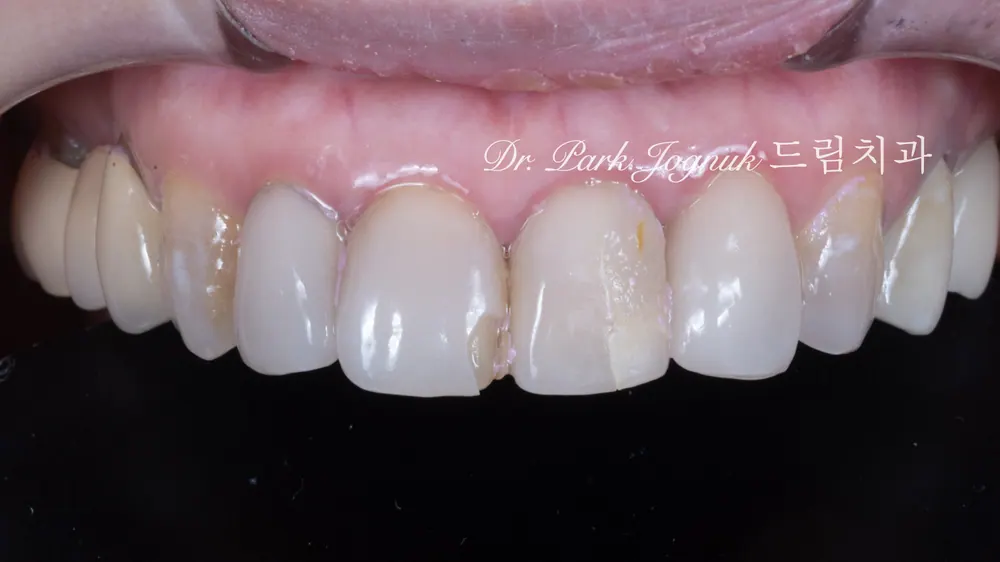
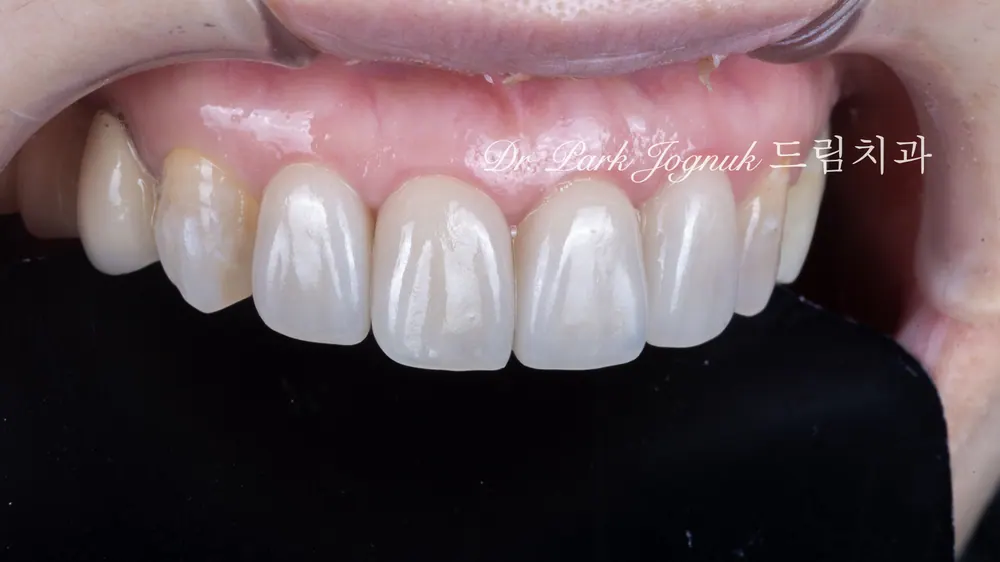
Photo 1 is from the first visit. Several problems can be seen.
First, the color looks off.
It's dull and opaque, with no sense of a natural tooth at all. It doesn't blend with the surrounding natural teeth either.
Second, the shape looks unnatural.
It's flat and monotonous, with no dimensionality. The four teeth look almost like tiles.
Third, the size and proportions don't match.
Each tooth is a different size, with no harmonious proportion between them.
Fourth, there's no surface texture.
A natural tooth has subtle contours and texture, but this crown was completely smooth and artificial.
And on top of everything else, one of them had cracked.
A cracked crown strongly suggests there was a problem with the fabrication or the bite.
Precise Diagnosis: The Redo Begins
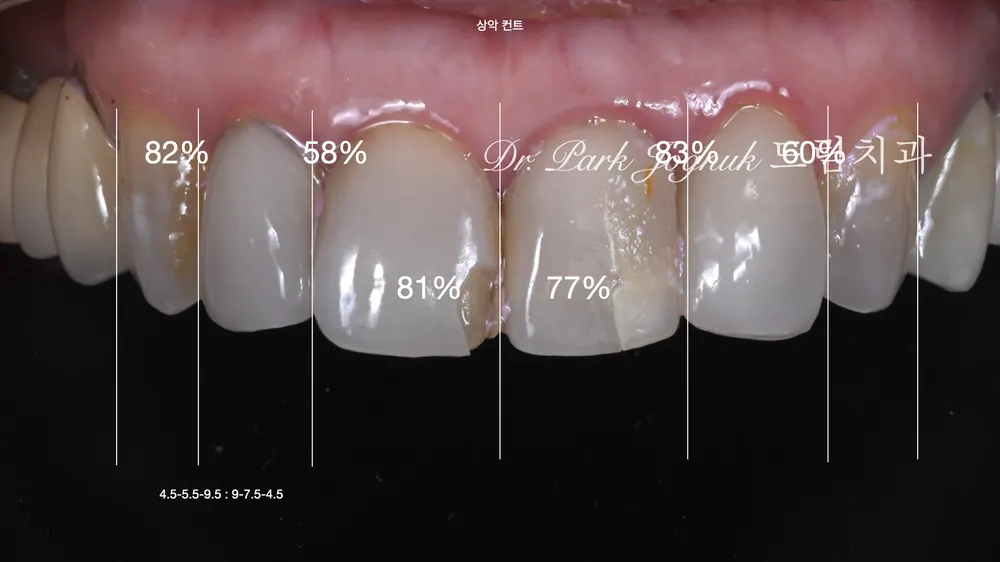
Photo 2 shows the precise diagnostic process.
An all-ceramic redo needs to be handled even more carefully than the initial treatment.
We analyzed the patient's face shape, lip line, and smile curve.
We evaluated what kind of relationship the teeth needed with the face to look natural.
We precisely measured the size, shape, and proportions of each tooth.
We quantified the problems with the existing crowns.
We also analyzed the color in detail.
We recorded the hue, value, and chroma of the surrounding natural teeth and planned to make the result as harmonious as possible.
As we worked through the diagnosis, I explained to the patient,
"We're not just going to fix the crack — we're going to give you a completely new smile."
Designing It Perfectly with a Wax-Up
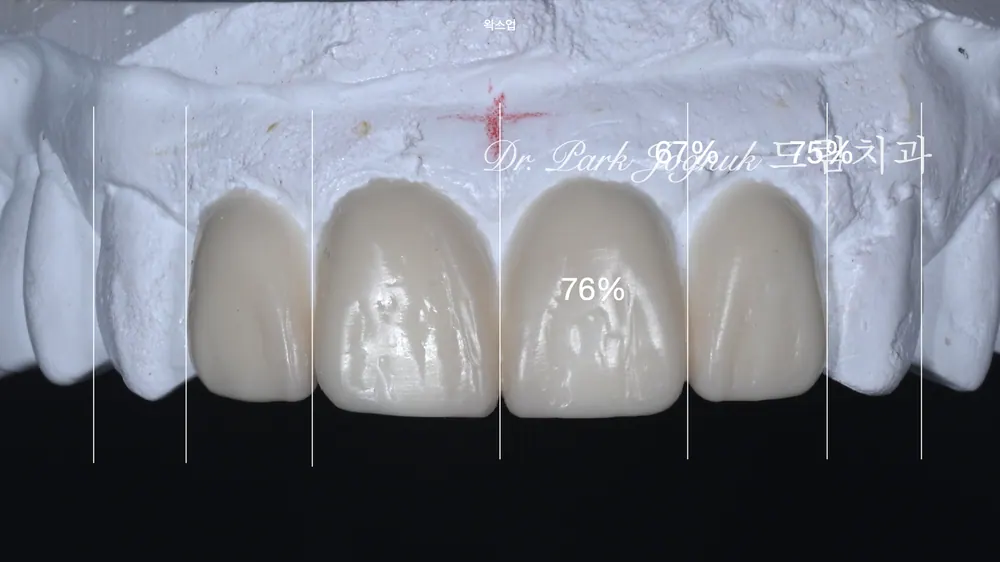
Photo 3 shows the result of the diagnostic wax-up.
This is the process of building an ideal crown shape ahead of time, based on the diagnostic results.
We adjusted the size of the teeth to suit the patient's face and lips.
We designed them with a natural proportion — not too large, not too small.
We designed the shape of each tooth in fine detail.
Rather than simply square or round, we reproduced the subtle curves and contours of a natural tooth.
We matched the left-right symmetry perfectly.
We designed the two central incisors to mirror each other like a reflection.
We also planned the surface characteristics.
We included developmental lobes, fine irregularities, and a natural texture in the design.
Seeing the wax-up model, the patient
expressed her anticipation, saying, "It finally feels like I'm getting the right treatment."
Creating a Natural Look Through Hand-Layered Buildup
We carefully removed the existing crowns,
and reshaped the teeth to prepare them for the new crowns.
Then, through the most important step — the hand-layered buildup method —
we fabricated the all-ceramic crowns.
We used several kinds of ceramic powder, stacking them layer by layer.
We applied a dentin-colored core on the inside, an enamel color in the middle, and translucent ceramic on the outside.
The cervical area was made in a warm ivory tone, the middle in a brighter shade,
and the tooth tip was made with translucent ceramic, to reproduce a natural shift in color.
We also gave the surface fine texture to reproduce the surface characteristics of a natural tooth.
It's these details, together, that make it look like "real teeth."
After Treatment: A Complete Transformation
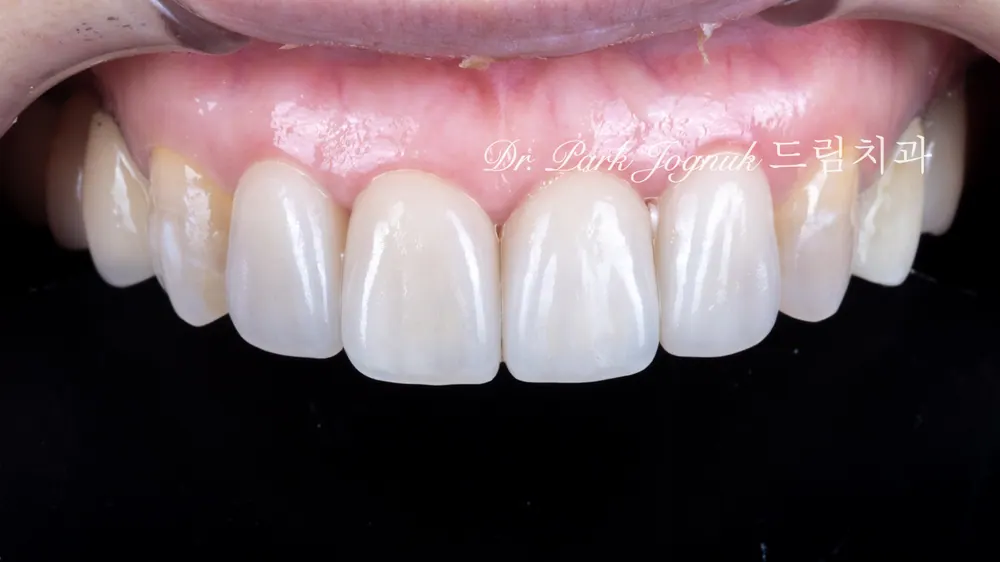
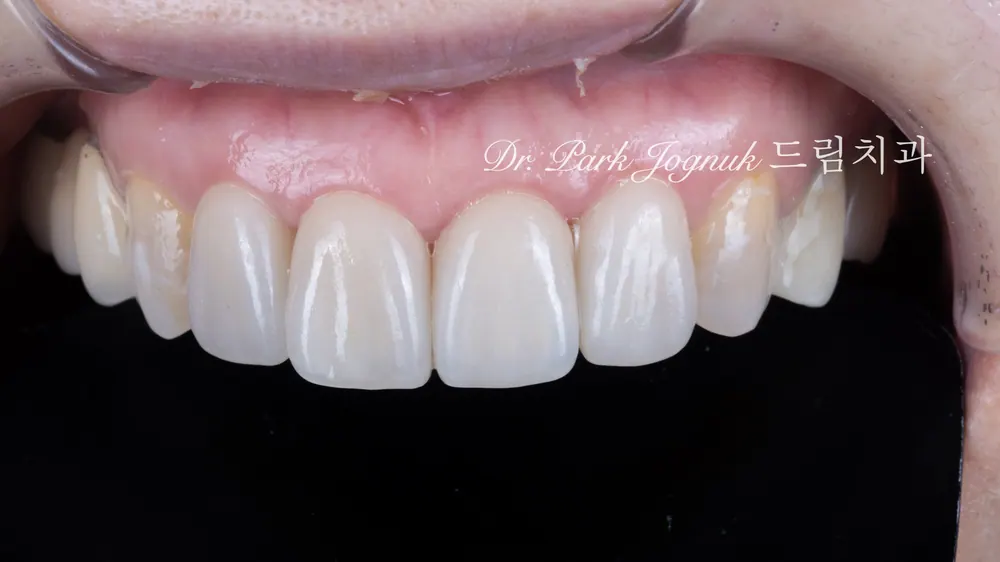
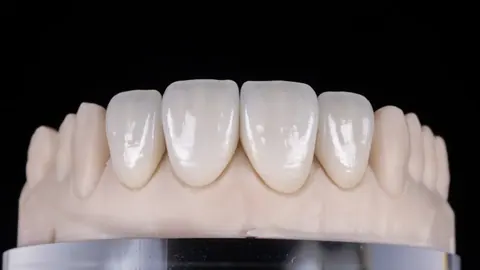
Photos 4, 5, and 6 show the result after treatment. Compared with before treatment,
it's like a completely different world.
A Natural Color
The color looks truly natural.
Unlike the dull, opaque look before, the color is now clear and full of life.
It blends in perfectly with the surrounding natural teeth.
There's a subtle shift in color from the cervical area to the incisal edge, which creates a sense of depth.
The translucency at the tooth tip was also beautifully expressed.
A Beautiful Shape
The shape of the teeth is elegant and natural.
Rather than flat, it's three-dimensional, with each tooth having its own individual character while still coming together in harmony.
The left-right symmetry is flawless, and the proportions between the teeth are ideal.
The smile curve came out soft and beautiful.
A Living Translucency
The most important difference is the translucency.
The tooth tips are naturally translucent, so light passes through and diffuses softly.
This translucency is exactly what makes the decisive difference between a natural tooth and an artificial one.
It can only be achieved through hand-layered buildup.
The Patient's Satisfaction
When the patient looked in the mirror, she was overwhelmed, saying, "I can't believe it."
She was genuinely delighted, saying, "I finally have natural-looking teeth."
"I came in because of the crack, but I ended up with a completely new smile. Thank you so much,"
she said — and hearing that gave me a real sense of fulfillment as a dentist.
How to Find a Good Gangnam Veneer Clinic
For anyone considering an all-ceramic redo or a Gangnam veneer redo,
here's how to find a good Gangnam veneer clinic.
First, check whether they offer precise diagnosis.
There should be a system that quantitatively analyzes tooth size, proportion, and color, starting from a facial analysis.
Second, check whether there's a wax-up process.
A wax-up diagnosis that builds the final result in advance and shows it to you is essential.
Third, check whether it's a hand-layered buildup method.
For a natural look, it should be a buildup method that stacks multiple layers of ceramic, not a method that mills a single block.
Fourth, ask to see actual redo cases.
Before-and-after photos of similar cases will tell you a lot about the clinic's skill.
Fifth, check the dentist's experience.
Choose a dentist with more than 20 years of clinical experience who has handled a large number of cases.
Frequently Asked Questions (Q&A)
Q1. Why do all-ceramic crowns crack?
A. It could be due to excessive bite force, internal stress that developed during fabrication, or a problem with the material.
This can be prevented through precise diagnosis, careful fabrication, and proper bite adjustment.
Q2. Can just the cracked one be redone on its own?
A. It's possible, but matching the color can be difficult.
It's very hard to reproduce exactly the same color as the existing crowns.
For the best overall harmony, it's better to redo them together.
Q3. Could an all-ceramic redo crack again afterward?
A. It's very stable as long as precise diagnosis, careful fabrication, and proper bite adjustment are all done correctly.
The hand-layered buildup method has less internal stress, which lowers the risk of cracking.
This article is based on the real clinical experience of a dentist who has provided esthetic dental care in Apgujeong for 20 years. I teach all-ceramic crown and veneer techniques to dentists every month at Lamista Academy, and I have published Korea's first veneer textbook, 『최소 삭제를 위한 라미네이트 임상』 (Laminate Clinical Practice for Minimal Reduction).
This article is a clinical note written by Dr. Park Jonguk of Dream Dental Clinic, Gangnam; the original was published on his blog. The photographs shown are real cases he treated. Results vary with each patient’s condition, and every procedure carries the possibility of individual variation and side effects.
Quick Consult
Request a Callback
Leave your number and we will call you back during clinic hours.
Request Received
We will contact you during clinic hours. For urgent matters, please call +82-2-3448-0028.