
Apgujeong-dong Veneers: Veneers for Teeth with Gum Asymmetry
Hello.
I am Park Jonguk, director of Dream Dental Clinic, located at Apgujeong Station.
The cases for Apgujeong-dong veneers are quite varied.
This time, let's look at a case where the two front teeth — that is, the central incisors — were asymmetrical.
Symmetry is a very important factor in dental aesthetics.
In particular, the symmetry of the two central incisors is the most basic foundation of aesthetics.
No matter how pretty each front tooth is on its own, if they aren't symmetrical,
the aesthetic result is bound to fall considerably short.
This kind of symmetry needs to be thought of in two parts: the symmetry of the teeth, and the symmetry of the gums.
Whether it's because the shape of the teeth doesn't match, or because the shape of the gums is asymmetrical,
there's a lot to think through when veneers are the chosen treatment.
For a slight degree of asymmetry, it can be addressed with a minute amount of reduction.
Please check the link below.
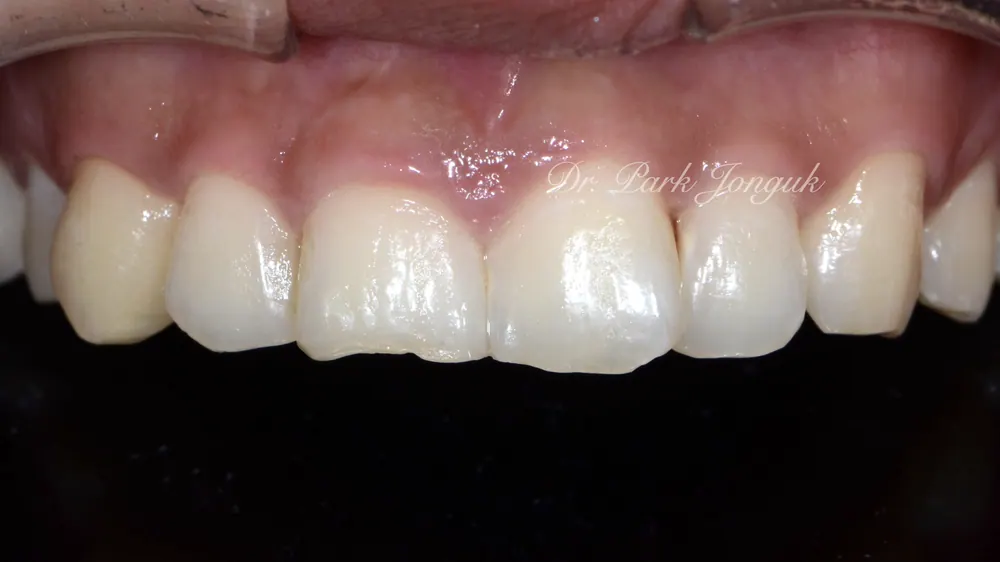
The two teeth in question were quite large in shape.
There was also a significant difference in gum height, and
even the shape and size of the teeth
were completely asymmetrical.
In a case like this, the issue of tooth size, first of all,
can be matched more precisely by reducing the interproximal area between the teeth.
For the gums, laser gum contouring is an important step, but
even more important than that is
stabilizing the gums through the use of temporary teeth.
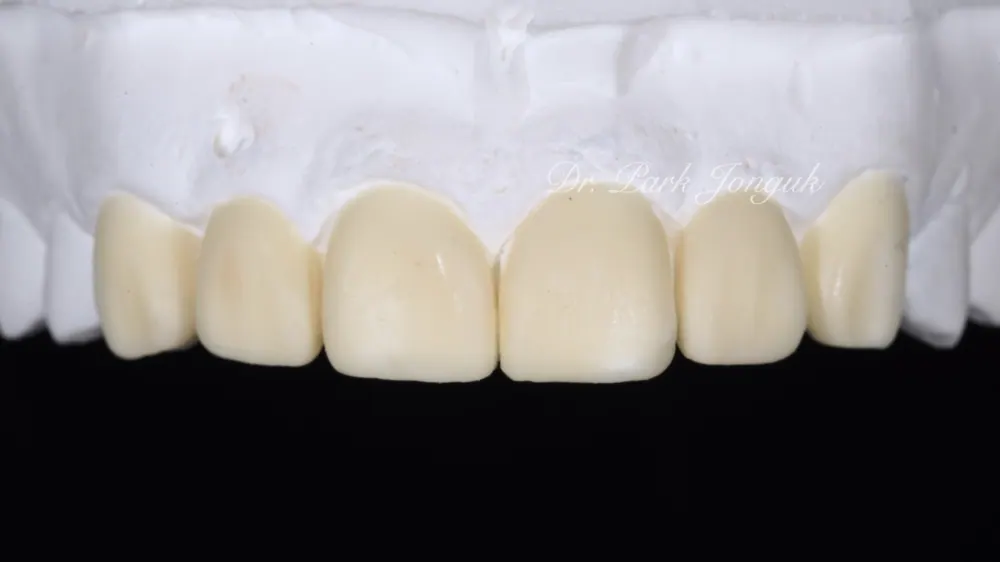
When carrying out Apgujeong-dong veneers, we take factors like this
into account and use wax to shape out the target design.
The methods for making the shape of the gums symmetrical
are, first, matching the gums using a laser, and
second, stabilizing the gums using temporary teeth.
If the degree of asymmetry is large, both methods have to be used.
If there's gum inflammation or another factor involved,
the temporary teeth need to be used carefully.
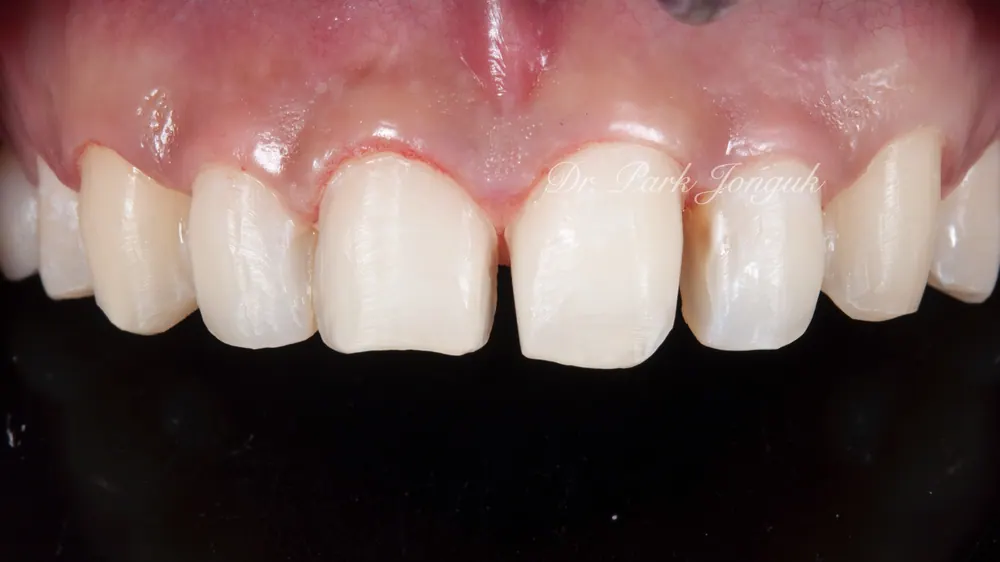
Because of the asymmetry in tooth size,
the interproximal area between the teeth was reduced
to match the size of the teeth.
Laser gum contouring is carried out.
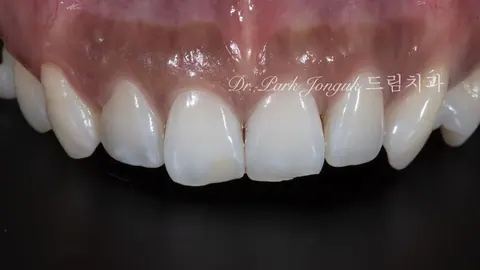
You can see that the gum area near the right front tooth was shaped using a laser.
While a laser allows the gum to be cut without serious damage,
that also means healing happens quickly, and so
the gum has a strong tendency to revert back to its original shape.
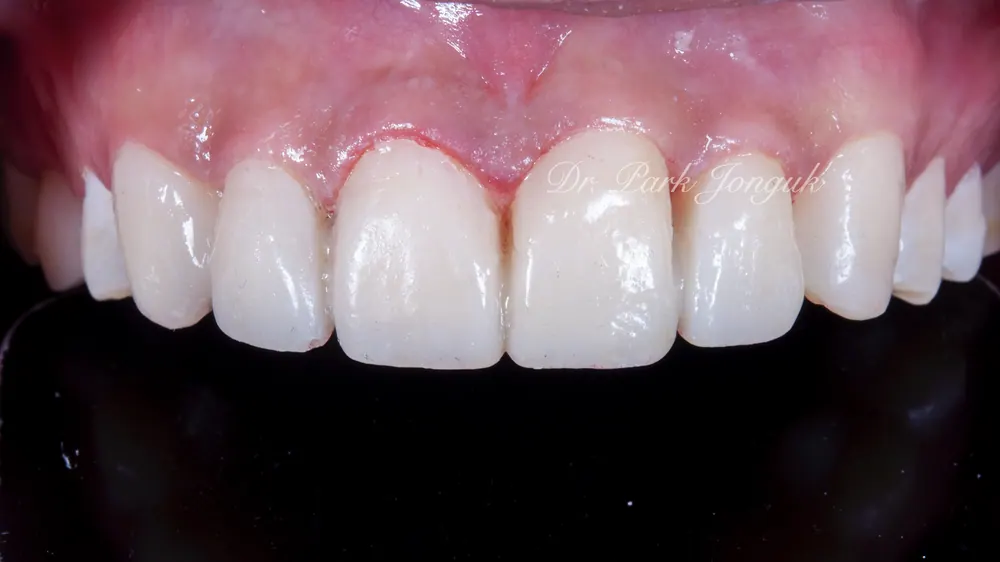
By making temporary teeth,
the gum in the contoured area
is kept from reverting back to its original shape.
Only when the temporary teeth are fabricated precisely at this stage
can gum inflammation be avoided.
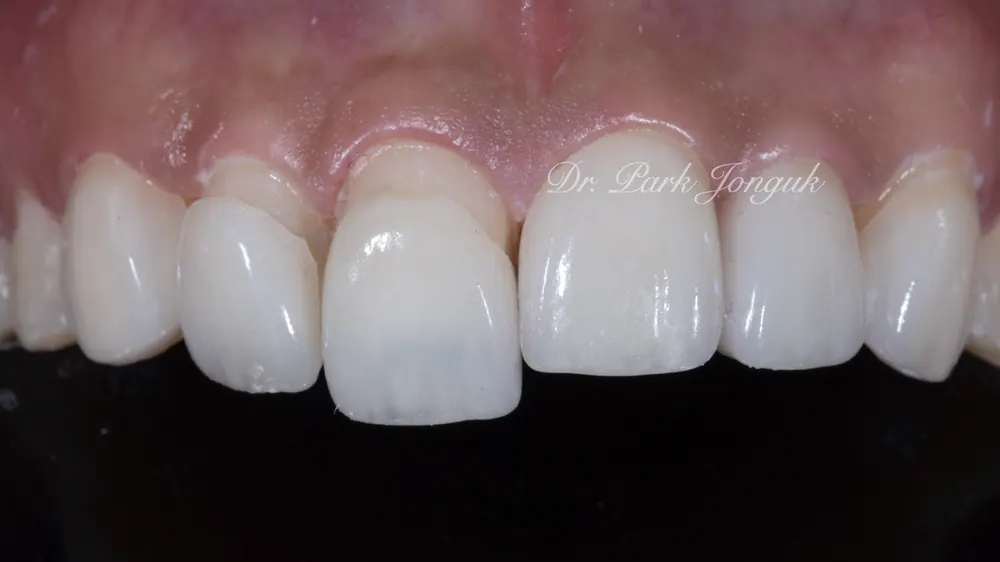
Thanks to the temporary teeth,
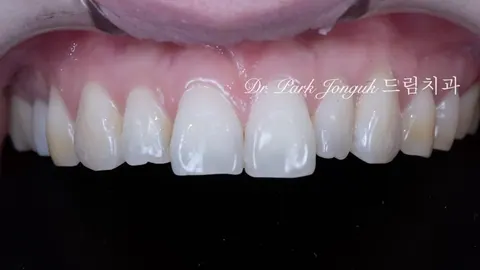
you can see that the contoured gum area healed very cleanly.
If contouring is forced through with the laser alone and the temporary teeth aren't made precisely,
the gum becomes inflamed again, and
problems arise even after the veneer treatment is complete.
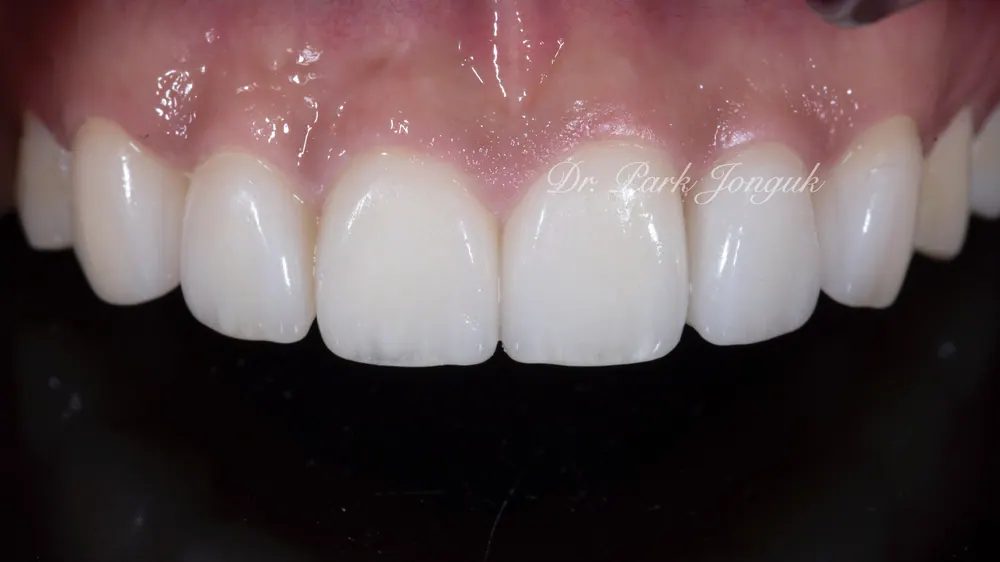
Gum contouring is mostly carried out by trimming tissue away.
Since it's generally not possible to increase the amount of gum tissue,
you can think of it as matching the gum to whichever tooth already appears longer.
In the case above as well,
the shape was matched to the left front tooth.
Since the gum shape of the left front tooth wasn't ideal enough to match perfectly,
we adjusted the shape in the direction of making the right front tooth look attractive
and worked from there.
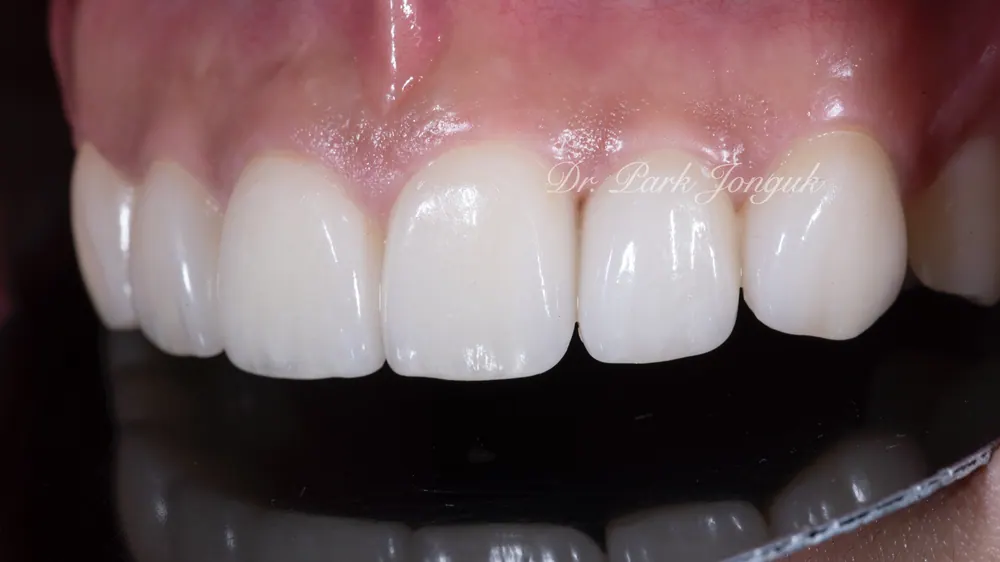
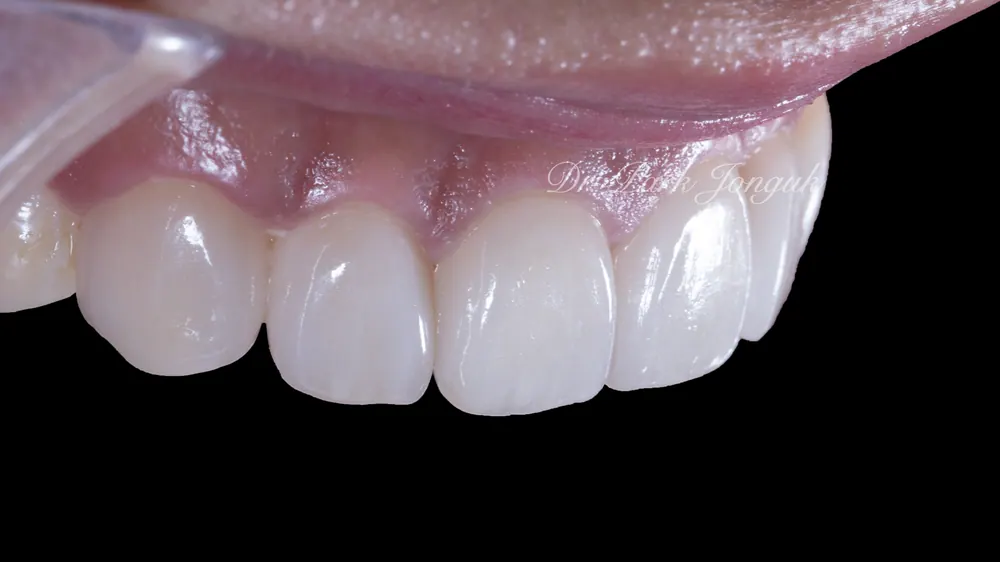
There are cases where gum inflammation occurs after Apgujeong-dong veneers, but
if the correct design avoids irritating the gum,
the likelihood of inflammation is reduced.
It's possible to maintain very healthy gums, like the ones shown above.
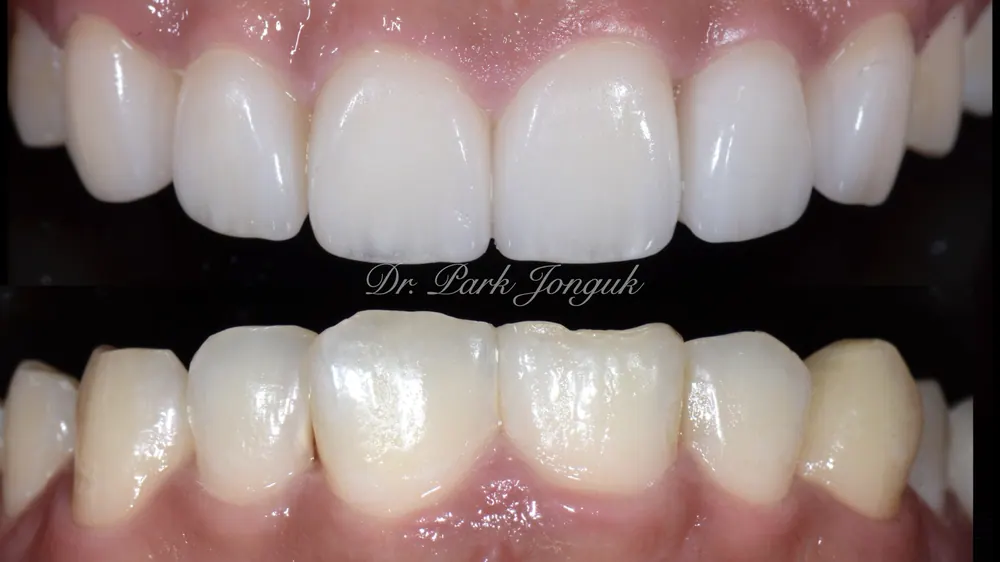
While protecting both the health of the teeth and the gums,
bringing out the shape, color, and translucency of the teeth as well,
beautiful Apgujeong-dong veneers were completed.
Since 2006, Dream Dental Clinic
This article is a clinical note written by Dr. Park Jonguk of Dream Dental Clinic, Gangnam; the original was published on his blog. The photographs shown are real cases he treated. Results vary with each patient’s condition, and every procedure carries the possibility of individual variation and side effects.
Quick Consult
Request a Callback
Leave your number and we will call you back during clinic hours.
Request Received
We will contact you during clinic hours. For urgent matters, please call +82-2-3448-0028.