
Cheongdam-dong Veneers for Gum Asymmetry and Decay Between the Front Teeth
Hello, I'm Park Jonguk, director of Dream Dental Clinic.
Decay developing between the front teeth
isn't very common.
The problem is that once it occurs, it tends to need repeated treatment.
It's usually treated with resin, a tooth-colored material,
but resin discolors over time.
Even if the decay itself doesn't come back, the discoloration alone
often means the tooth needs to be treated again.
In the back teeth, even with some discoloration,
retreatment often isn't necessary,
but in the front teeth, the space between the teeth ends up looking dark,
which creates an esthetic problem.
When decay develops between the front teeth like this,
it's typically treated with an all-ceramic crown.
More recently, we've been treating it with minimal reduction and Cheongdam-dong veneers
instead.
Let's look at a case where we treated decay between the teeth
while also improving a slight asymmetry in the gum shape at the same time.
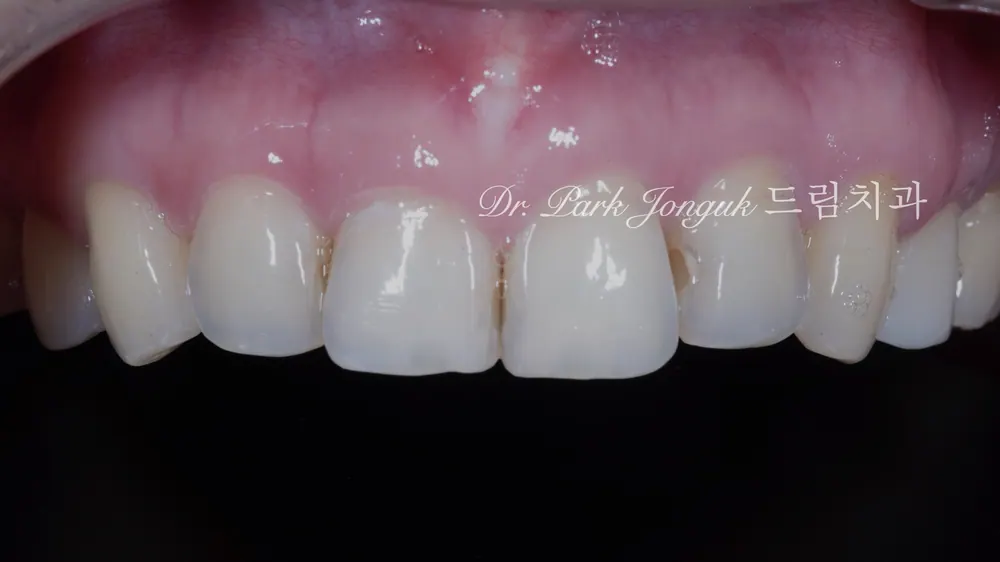
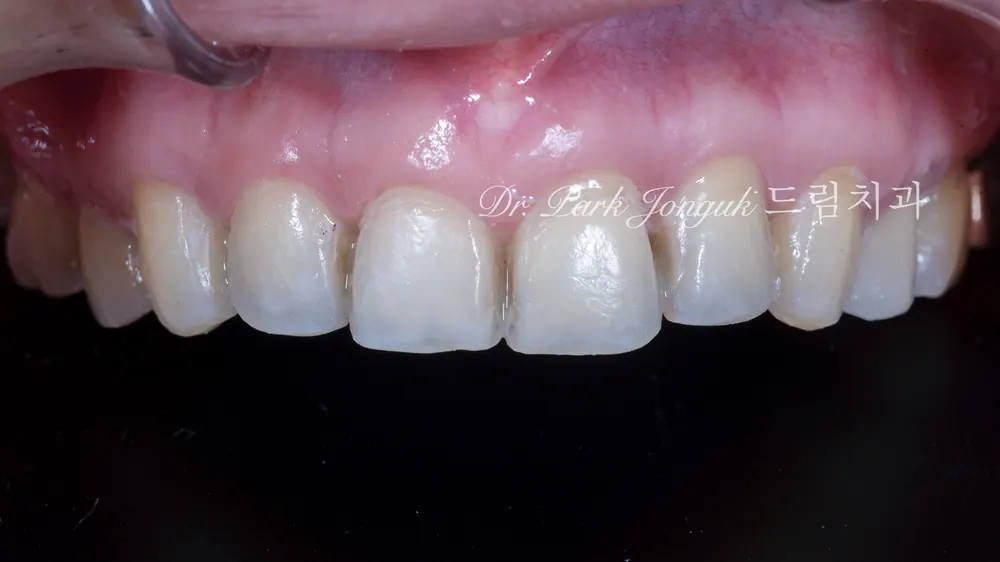
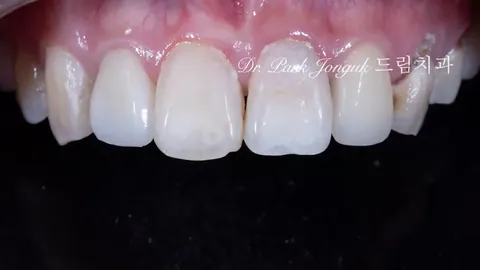
Everything that looks dark between the teeth here
is decay that had been treated with resin.
As in the photo above, resin
discolors and darkens over time.
In the back teeth, this discoloration isn't visible, so it's not a problem,
but in the front teeth, as shown here, it creates an esthetic problem.
Every time that resin has to be retreated,
a little more tooth structure inevitably has to be removed,
so at some point, Cheongdam-dong veneers or an all-ceramic crown becomes necessary.
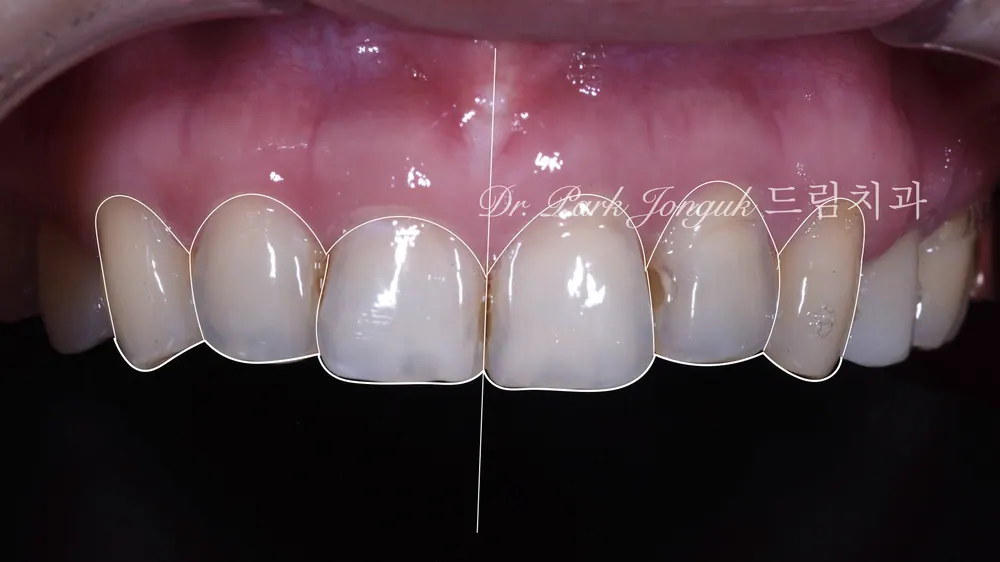
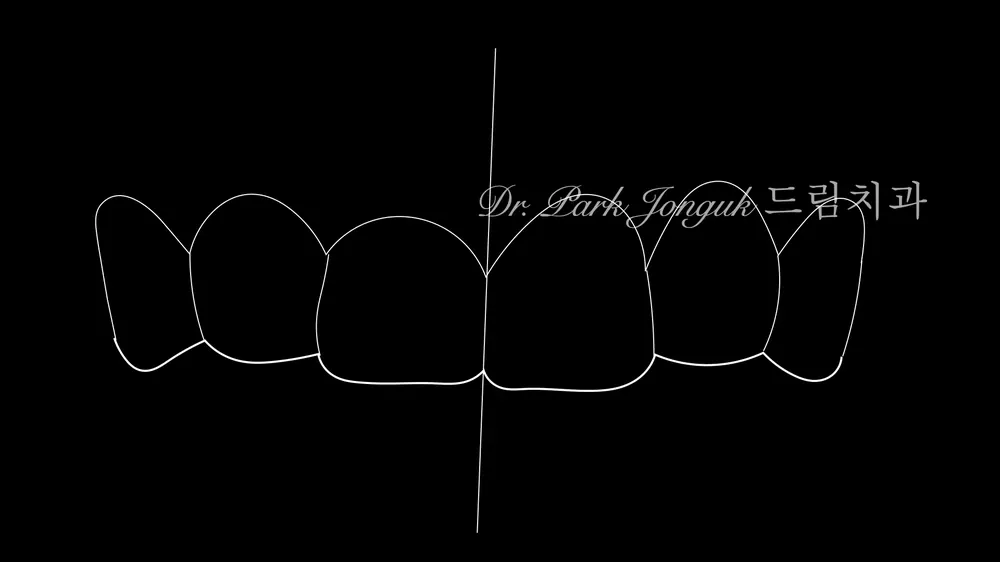
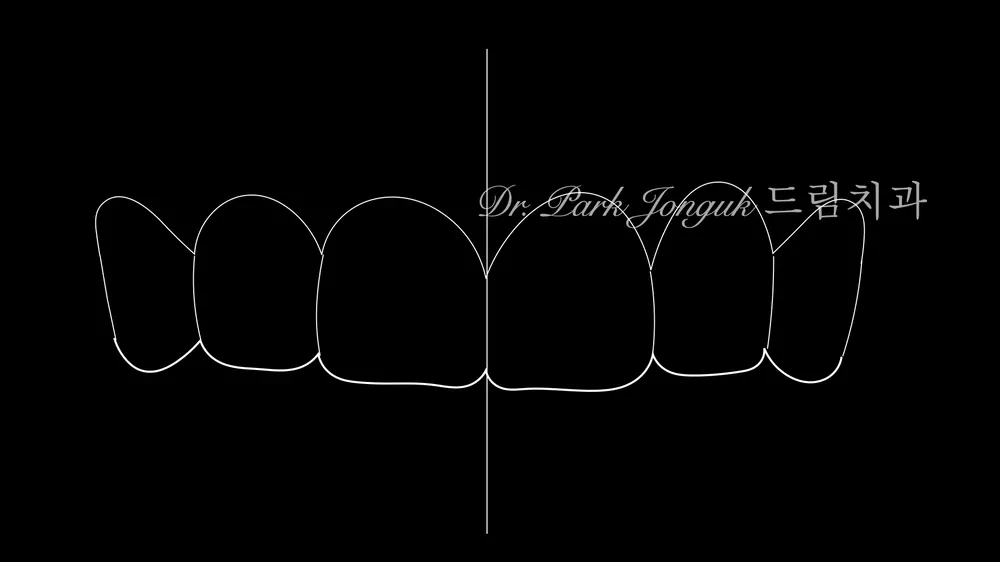
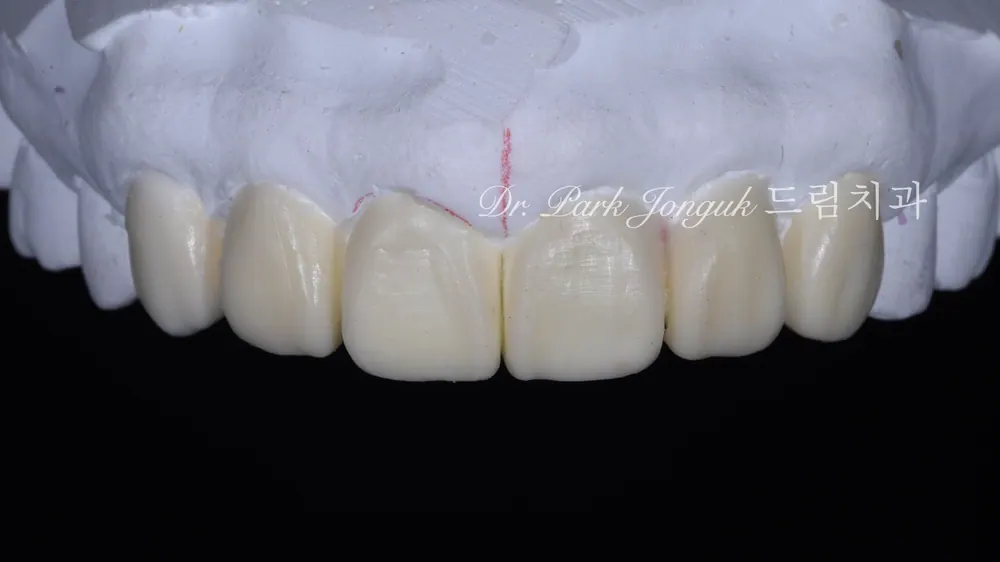
We work out a plan
for how to change the shape of the teeth.
In this process, we decide in advance exactly which parts of the tooth need to be reduced, and by how much.
We also decide how to handle the change in gum shape,
but since the gums are barely visible when the patient speaks or smiles,
we decided not to force gum contouring,
and instead to make the correction
by using the shape of the Cheongdam-dong veneers to gently press the gum into place.
After retreating the discolored resin,
we've completed only the minimal, fine reduction needed
to wrap the resin in ceramic.
As long as it's not for decay treatment,
the reduction needed for the veneer is so minimal that anesthesia isn't even necessary.
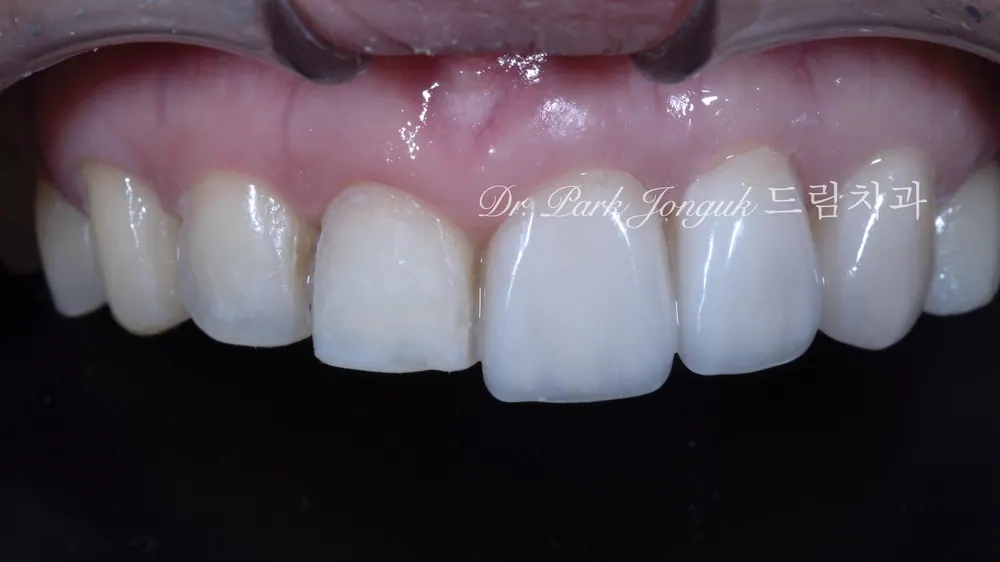
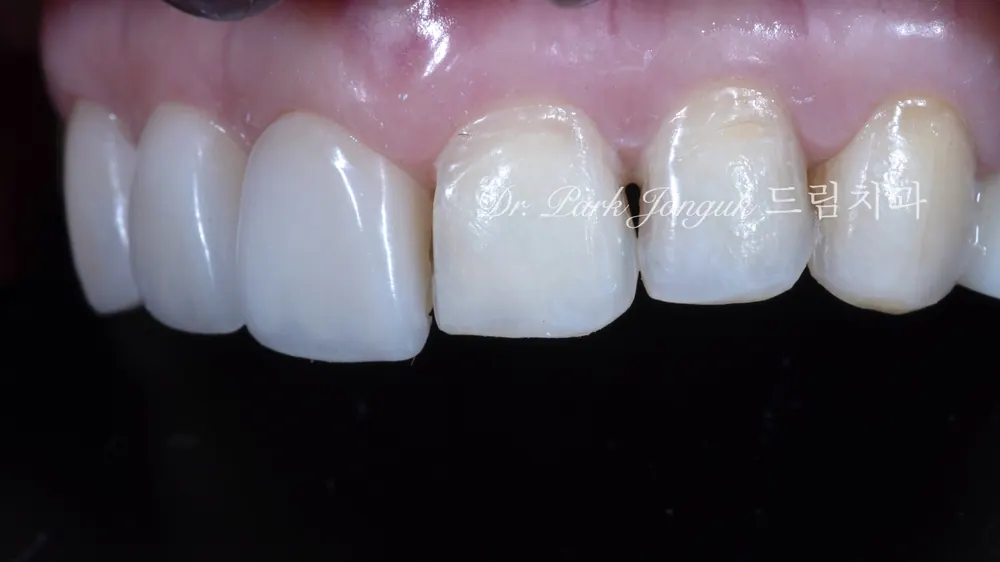
This way, the ceramic covers the space between the teeth well,
fully enclosing the resin underneath.
The ceramic that goes into that space between the teeth
is quite thin,
so it has to be fabricated with great precision.
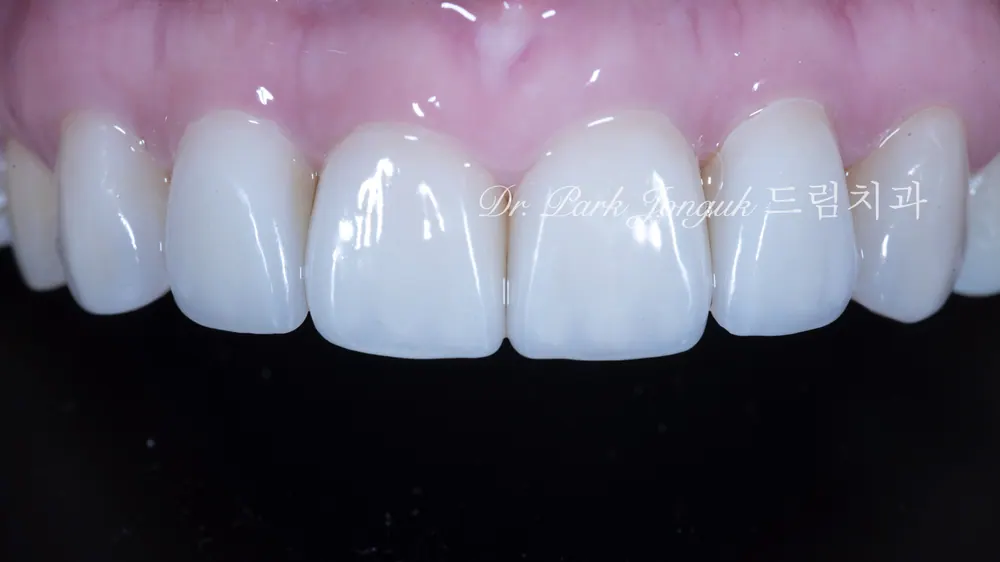
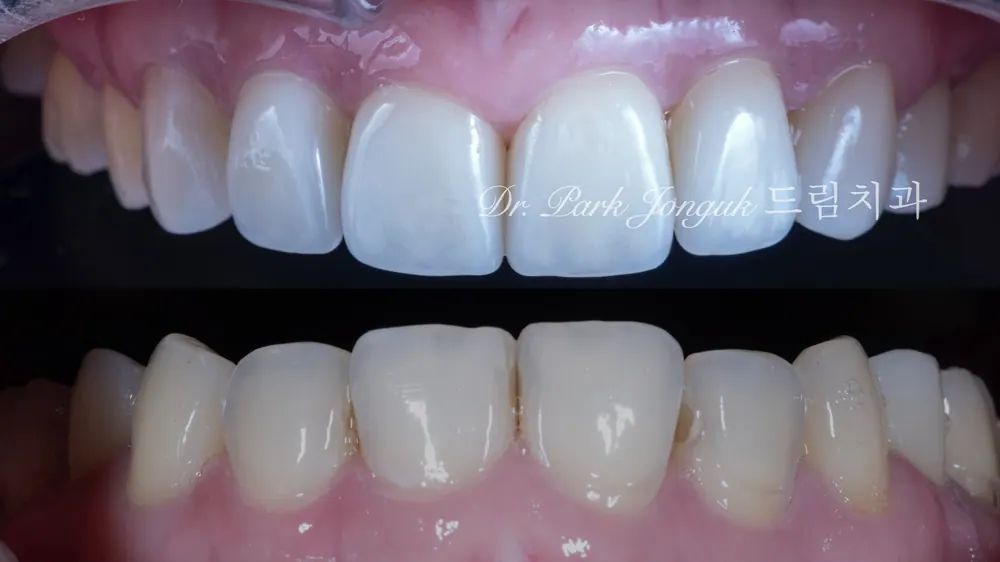
The veneer treatment is now complete.
So that the gum can rise up naturally,
we applied it using the shape design of the Cheongdam-dong veneers.
Because the ceramic fits well into the space between the teeth,
it can help prevent future discoloration.
The color and translucency of the teeth
were kept as close to the feel of natural teeth as possible.
Since 2006, Dream Dental Clinic
This article is a clinical note written by Dr. Park Jonguk of Dream Dental Clinic, Gangnam; the original was published on his blog. The photographs shown are real cases he treated. Results vary with each patient’s condition, and every procedure carries the possibility of individual variation and side effects.
Quick Consult
Request a Callback
Leave your number and we will call you back during clinic hours.
Request Received
We will contact you during clinic hours. For urgent matters, please call +82-2-3448-0028.